2017/06/30

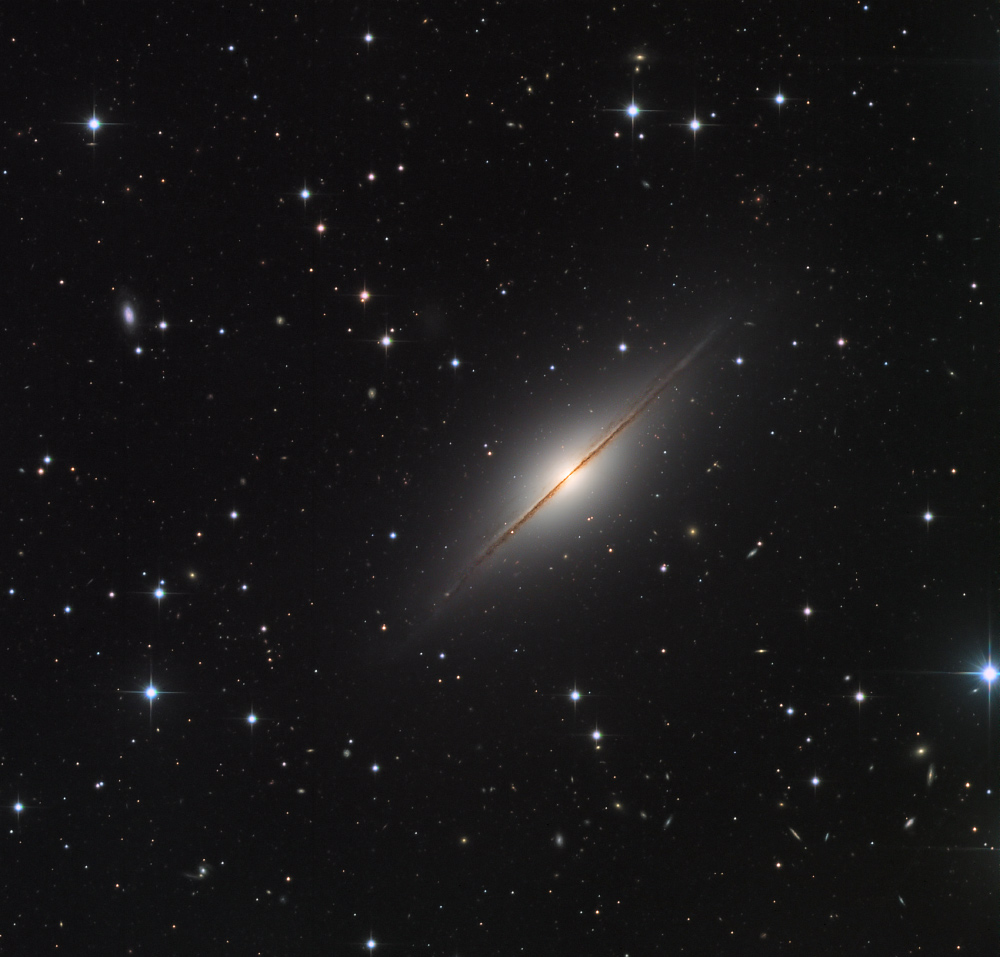
NGC 7814: The Little Sombrero in Pegasus


Point your telescope toward the high flying constellation Pegasus and you can find this expanse of Milky Way stars and distant galaxies. Dominated by NGC 7814, the pretty field of view would almost be covered by a full moon. NGC 7814 is sometimes called the Little Sombrero for its resemblance to the brighter more famous M104, the Sombrero Galaxy. Both Sombrero and Little Sombrero are spiral galaxies seen edge-on, and both have extensive halos and central bulges cut by a thin disk with thinner dust lanes in silhouette. In fact, NGC 7814 is some 40 million light-years away and an estimated 60,000 light-years across. That actually makes the Little Sombrero about the same physical size as its better known namesake, appearing smaller and fainter only because it is farther away. Very faint dwarf galaxies, potentially a satellites of NGC 7814, have been discovered in deep exposures of Little Sombrero. via NASA https://go.nasa.gov/2ssKYoB

2017/06/29

Starry Night and Aurora


June 29, 2017 Expedition 52 Flight Engineer Jack Fischer of NASA photographed the glowing nighttime lights of an aurora from his vantage point in the International Space Station's cupola module on June 19, 2017. Part of the station's solar array is also visible. via NASA https://go.nasa.gov/2slEU6p

重新詮釋ESBI 看懂財富的真相 《飛磚夜說》 on Y2B


Liked on YouTube: 重新詮釋ESBI 看懂財富的真相 《飛磚夜說》 https://youtu.be/J1jQBXTIgOU

Dasha Presents Update 0.6.7


战舰世界更新067

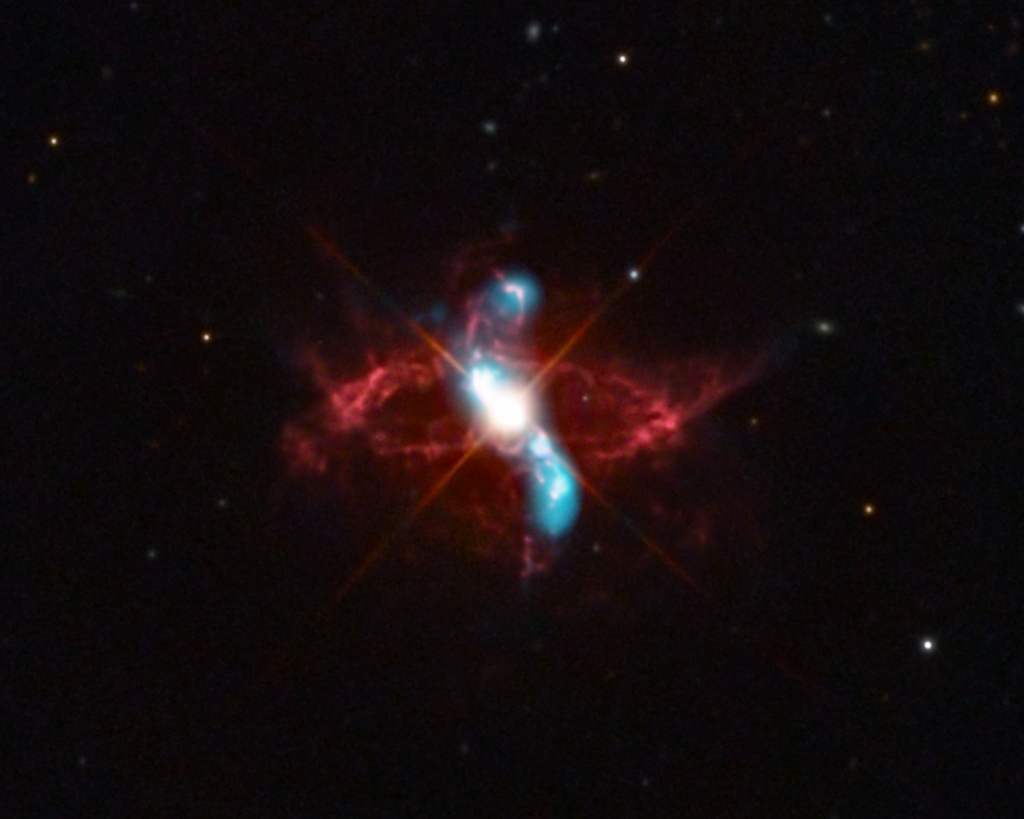
Symbiotic R Aquarii


June 29, 2017 A long recognized naked-eye variable star, R Aquarii is actually an interacting binary star system, two stars that seem to have a close, symbiotic relationship. About 710 light years away, it consists of a cool red giant star and hot, dense white dwarf star in mutual orbit around their common center of mass. The binary system's visible light is dominated by the red giant, itself a Mira-type long period variable star. But material in cool giant star's extended envelope is pulled by gravity onto the surface of the smaller, denser white dwarf, eventually triggering a thermonuclear explosion and blasting material into space. Optical image data (red) shows the still expanding ring of debris originating from a blast that would have been seen in the early 1770s. The evolution of less understood energetic events producing high energy emission in the R Aquarii system has been monitored since 2000 using Chandra X-ray Observatory data (blue). The composite field of view is less that a light-year across at the estimated distance of R Aquarii. via NASA https://go.nasa.gov/2sox4Ec